Isma’ l-episodju
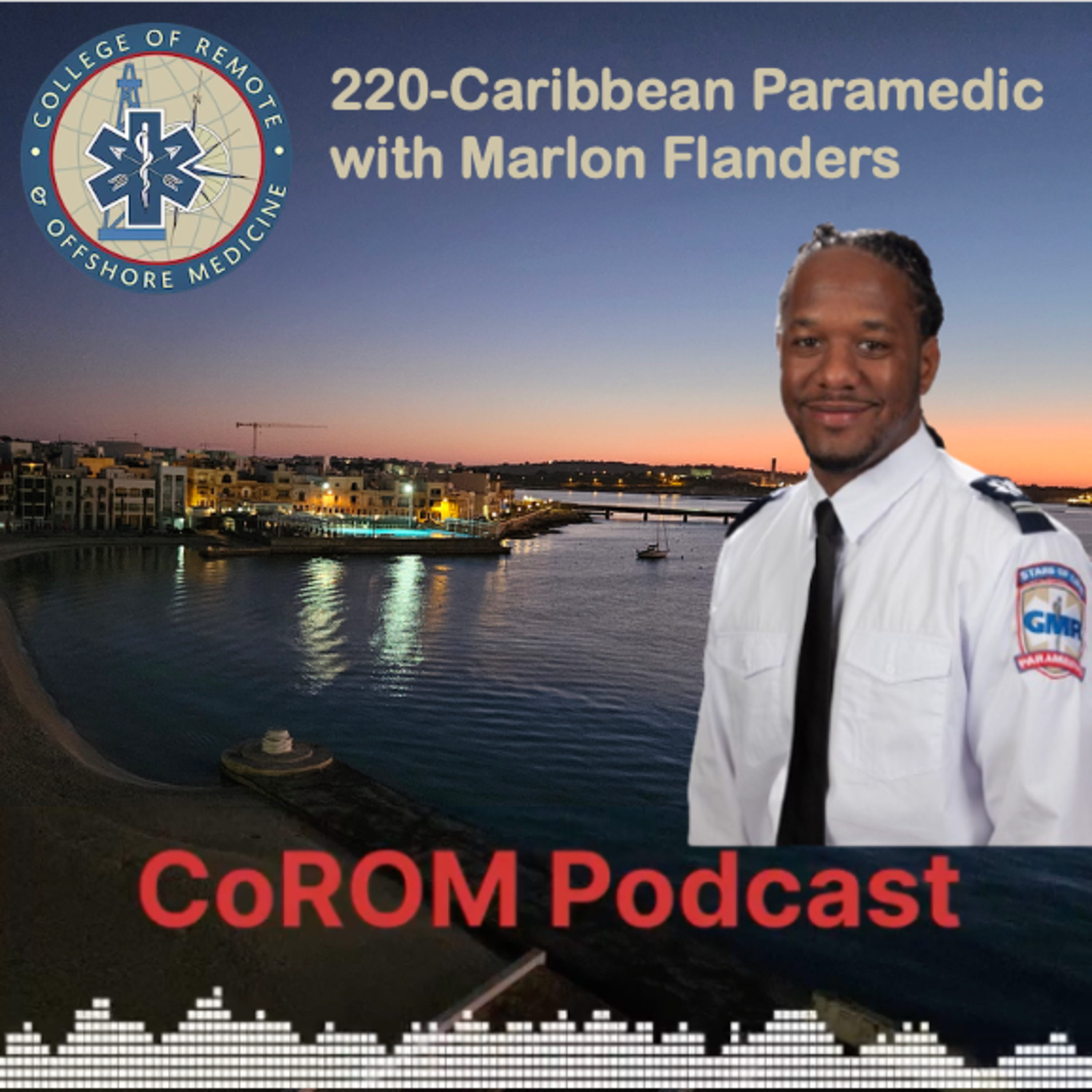
220-Caribbean Paramedic with Marlon Flanders
Dettalji tal-Episodju
<p>This week, Aebhric O’Kelly welcomes <strong>Marlon Flanders</strong>, a paramedic from Trinidad and Tobago and MSc in Austere Critical Care student at CoROM.</p><p>After 13 years in ambulance services, Marlon has transitioned into offshore medicine, providing healthcare aboard oil and gas installations and deep-sea pipeline vessels in the Caribbean. He discusses the challenges of moving from urban emergency medical services into an environment where primary care, logistics, occupational health and evacuation planning become essential responsibilities.</p><p>The conversation explores the development of paramedicine in Trinidad and Tobago, including clinical scope of practice, international certification, advanced paramedic education and the challenges of maintaining consistent professional standards across national borders.</p><p>Marlon reflects on his experience completing the MSc in Austere Critical Care, including practical ultrasound training in Malta, and explains how postgraduate education has helped him adapt to the demands of remote healthcare.</p><p><br></p><p><u><strong>Chapters</strong></u></p><p>00:00 – Opening hook: Offshore versus urban paramedicine<br>00:15 – Welcome to CoROM Conversations<br>00:44 – Introducing Marlon Flanders<br>01:03 – Thirteen years in EMS and transitioning to offshore medicine<br>02:08 – Logistics and primary care aboard offshore installations<br>02:57 – How the MSc in Austere Critical Care supports offshore practice<br>03:26 – Practical ultrasound training in Malta<br>04:19 – Ultrasound and offshore evacuation decisions<br>05:13 – BOSIET, STCW and offshore safety training<br>06:04 – Paramedic education and registration in Trinidad and Tobago<br>06:38 – International certification and employment opportunities<br>07:33 – Professional registration and the International Paramedic Registry<br>08:30 – Flight and critical care paramedic certification<br>09:34 – Completing paramedic training in Trinidad and the United States<br>11:10 – Clinical autonomy and paramedic scope of practice<br>12:04 – Sedation, analgesia and multimodal pain management<br>12:41 – Ambulance transport times and rural healthcare access<br>13:52 – Helicopter medical evacuation between Trinidad and Tobago<br>14:33 – Trauma facilities and specialist hospital services<br>15:25 – Common medical and traumatic emergencies in Caribbean EMS<br>16:12 – Stroke recognition and barriers to timely thrombolysis<br>16:45 – Public education, bystander CPR and dispatcher-assisted resuscitation<br>17:53 – Opportunities to improve community emergency response<br>18:16 – MSc research into non-emergency ambulance utilisation<br>18:41 – Community paramedicine and advanced clinical practice<br>19:33 – Why Marlon chose the MSc in Austere Critical Care<br>20:22 – Reflections on postgraduate education and transitioning careers<br>21:34 – Diving medicine and further offshore medical qualifications<br>23:03 – Redesigning ambulance deployment across Trinidad and Tobago<br>24:05 – Future ambitions in Caribbean and international medicine<br>24:21 – Humanitarian medical opportunities in Haiti<br>25:17 – Preparing for healthcare delivery in challenging security environments<br>26:48 – Advice for clinicians entering austere medicine<br>27:00 – Persistence, adaptability and overcoming professional barriers<br>28:01 – Final reflections and closing remarks</p><ul><li><p>Paramedicine in Trinidad and Tobago</p></li><li><p>Offshore medicine and occupational healthcare</p></li><li><p>Transitioning from urban EMS to remote practice</p></li><li><p>Primary care in resource-limited environments</p></li><li><p>International paramedic registration and certification</p></li><li><p>Advanced critical care education</p></li><li><p>Point-of-care ultrasound</p></li><li><p>Offshore medical evacuation and logistics</p></li><li><p>Multimodal analgesia in prehospital care</p></li><li><p>Stroke recognition and community CPR</p></li><li><p>Non-emergency ambulance utilisation</p></li><li><p>Community paramedicine</p></li><li><p>Ambulance resource allocation</p></li><li><p>Humanitarian medicine in Haiti</p></li><li><p>International career development</p></li></ul><p>#CoROM #CoROMConversations #Paramedic #CaribbeanEMS #TrinidadAndTobago #OffshoreMedicine #AustereMedicine #RemoteMedicine #CriticalCareParamedic #CommunityParamedicine #HumanitarianMedicine #EMS #MedicalEducation</p>